
The Explosive Rise of AI Software Clones: What ArtCraft Means for Adobe, Office, and SAP
A Weekend, Seven Apps, One Big Claim
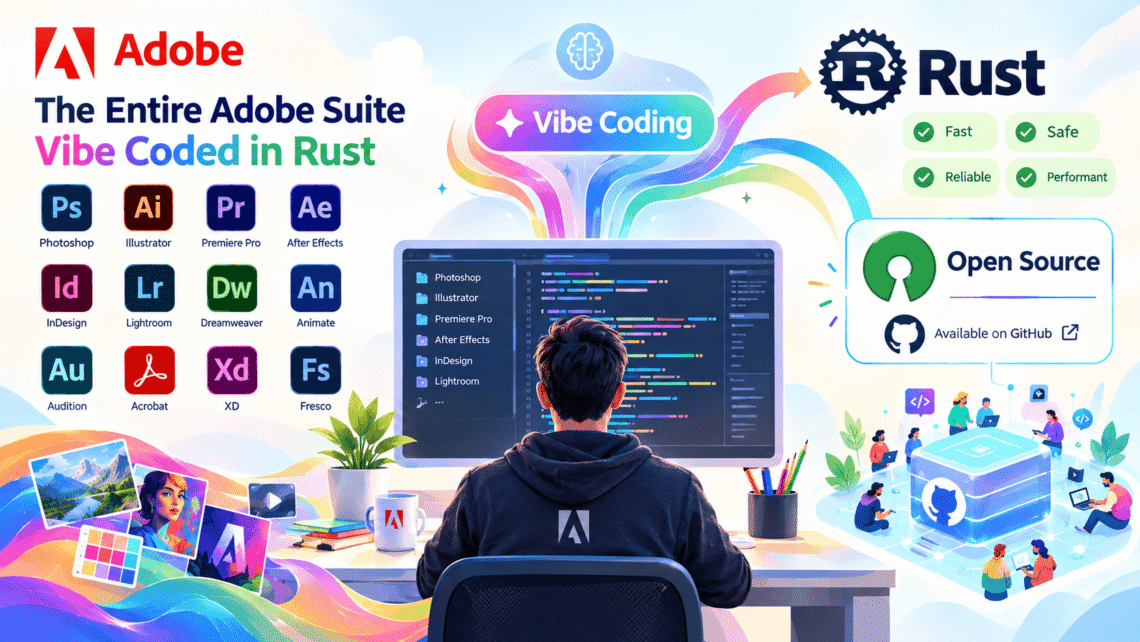
Last weekend, Atlanta developer Brandon Thomas released ArtCraft. It is a suite of seven free, open-source apps that copy the look and tools of Adobe’s creative software. Thomas says he built them with Anthropic’s Claude Opus 5.5 and the Rust programming language. He announced the project on Reddit and declared that “software is over.”
ArtCraft is the clearest example yet of a new trend. This article looks at what was built, how well it works, the legal questions, and what AI software clones could mean for Office 365, SAP, and other paid platforms. The rise of AI software clones raises one big question. What protects paid software when copying gets cheap?
What ArtCraft Actually Is
ArtCraft began last year as a “controllable AI for artists” tool. It has now become seven apps: PhotoCraft, VectorCraft, FilmCraft, LightCraft, EffectCraft, DesignCraft, and PrintCraft. They target Photoshop, Illustrator, Premiere, Lightroom, After Effects, InDesign, and Acrobat. Browser versions run through WebAssembly.
The apps are open source under MIT and Apache licenses. Thomas plans to fund them by selling optional token-based access to ArtCraft’s AI image model. The suite is also built so AI agents can control it.
Thomas says Adobe’s cancellation fees pushed him to start. Adobe agreed in March 2026 to a $150 million settlement with the US government, which had alleged that it hid cancellation fees.
Does It Actually Work?
Not yet, at least not fully. Thomas calls it “very early alpha.” He first promised full feature parity within a month. He has since softened that to 99 percent parity in months. PhotoCraft’s own roadmap says real Photoshop compatibility remains well below 50 percent.
Users report missing features and bugs. Gizmodo advises caution before installing any vibe-coded software. Still, some early testers say the apps feel like their Adobe counterparts.
So the honest summary is this. A full replacement has not been delivered. A credible start has.
The Legal Questions Facing AI Software Clones
Thomas calls his method a “clean-room replacement.” That is an old technique. It means rebuilding functions from observed behavior, not from the original code. Courts have generally protected functionally identical software, provided it does not copy protected designs or code.
Two risks stand out. First, Ars Technica notes that copying a recognizable interface could raise trade dress claims. Second, the clean-room description is Thomas’s own account. A model trained on huge amounts of public text may have seen Adobe’s documentation and tutorials. Whether that taints a clean room is untested.
Adobe has not said how it will respond. Legal fights over AI software clones are likely to define the next few years.
Why Adobe May Be Less Exposed Than It Looks
Adobe’s financial numbers do not look like a company in trouble. One analysis argues the exposed group is the prosumer and small-business tier. These customers pay $20 to $60 a month mostly for features, familiarity, and file compatibility. That group could leak away.
Large customers pay for other things. They want accountability and legal indemnity. Adobe’s generative tools also run on its own servers and are sold by credit. PhotoCraft leaves those out. AI software clones can copy an interface. They cannot copy a license or a track record.
What AI Software Clones Mean for Office 365 and SAP
The same logic does not apply equally everywhere.
Office 365. Features are not Microsoft’s only moat. Free office suites have existed for years, yet Microsoft 365 still dominates. Customers stay for file compatibility, collaboration, identity management, security tools, and bundling with Teams and Exchange. AI software clones of Office could match features quickly. They would struggle to match an installed base.
SAP and ERP. AI software clones face a harder task here. ArtCraft copies desktop apps whose behavior anyone can observe. Enterprise platforms run on vendor servers, and their logic is hidden. ERP value also lives in data models, audit trails, compliance, and years of customization. For these buyers, the real switching cost is operational disruption, not the license fee.
One analyst tested the idea by building a barebones CRM clone in about three hours. Building the shell is easy. Building the trust is not.
The Market Backdrop
ArtCraft lands in a nervous market. Software stocks reset sharply in 2026 on fears that AI agents and coding tools will erode subscription revenue. Traders nicknamed the trend the SaaSpocalypse. A May analysis from Betterment put Adobe and Salesforce at roughly a 50 percent discount to early 2025 levels. ArtCraft feeds the fear that AI software clones will drain subscription income, even though Adobe’s reported revenue remains stable.
Six Implications of AI Software Clones
- Pricing power weakens at the low end. Subscription fatigue plus free alternatives pressures prosumer plans first.
- Moats move. Features matter less. Data, distribution, trust, compliance, and hosted AI matter more.
- Users face risk. Alpha software from a young project can carry bugs and security gaps.
- Legal fog persists. Trade dress and AI training questions remain unanswered.
- Sustainability is unproven. Free software still needs maintainers and money.
- The cost of building is falling. The cost of making AI software clones drops each time models improve. Value shifts toward taste, product judgment, and verification, a theme this blog has covered in its writing on vibe coding.
Conclusion
“Software is over” is a slogan, not a forecast. ArtCraft is an alpha with large gaps, and the biggest enterprise platforms rest on moats that copying cannot easily reach. But the direction is clear. The labor cost of rebuilding familiar software is collapsing.
AI software clones will not erase paid software. They will pressure it where its advantage is only features and habit. Vendors that win will sell trust, integration, and accountability. Those that sell only features should be worried.

You May Also Like
The Critical Future of AI Mathematics: Literature Mining, Crisis Debates, and What Comes Next (Part 2)
The Powerful Rise of AI in Mathematics: Automated Reasoning, Proof Assistants, and What Comes Next (Part 1)